Seismic Design Of Reinforced Concrete and Masonry Buildings Free PDF
10 January 2021Table of Contents
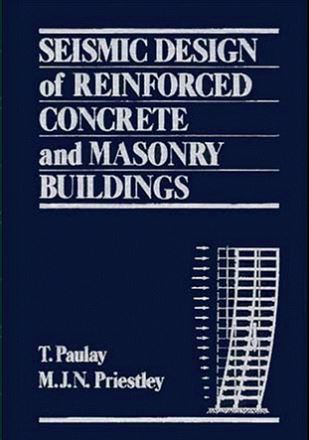
Seismic Design of Reinforced Concrete and Masonry Buildings: A Practical Engineering Reference
Seismic Design of Reinforced Concrete and Masonry Buildings is a well-established reference in earthquake engineering, widely used by structural engineers, academics, and advanced students working in seismic regions. The book focuses on the behavior, analysis, and design principles required to ensure buildings can safely resist earthquake forces.
Rather than treating seismic design as a purely code-driven exercise, the book emphasizes structural behavior, failure mechanisms, and performance-based thinking, making it highly relevant for real-world engineering practice.
What Is This Book About?
The book provides a comprehensive explanation of how reinforced concrete and masonry buildings respond to seismic loading and how engineers can design structures that achieve acceptable performance during earthquakes.
It integrates:
-
Earthquake engineering fundamentals
-
Structural dynamics concepts
-
Material behavior under cyclic loading
-
Practical design strategies
The focus is on understanding why structures fail or survive, not just how to satisfy code equations.
Key Topics Covered
1. Fundamentals of Earthquake Engineering
The book introduces essential seismic concepts such as:
-
Ground motion characteristics
-
Response spectra
-
Structural periods and damping
-
Dynamic response of buildings
These fundamentals form the basis for rational seismic design.
2. Seismic Behavior of Reinforced Concrete Structures
A major part of the book is dedicated to reinforced concrete buildings, covering:
-
Moment-resisting frames
-
Shear walls
-
Dual systems
It explains:
-
Ductility requirements
-
Capacity design principles
-
Plastic hinge formation
-
Energy dissipation mechanisms
3. Seismic Design of Masonry Buildings
The book addresses masonry structures, which are often more vulnerable during earthquakes. Topics include:
-
Load-bearing masonry systems
-
Reinforced masonry behavior
-
Failure modes and strengthening concepts
This makes the book particularly valuable in regions where masonry construction is common.
4. Capacity Design and Ductile Detailing
One of the book’s strongest contributions is its clear explanation of:
-
Strong-column weak-beam philosophy
-
Shear design for seismic actions
-
Confinement reinforcement
-
Detailing for ductility
These principles are critical for preventing brittle failure during earthquakes.
5. Performance-Based Seismic Design Concepts
Beyond traditional force-based methods, the book discusses:
-
Expected damage levels
-
Serviceability and life-safety objectives
-
Post-earthquake performance
This aligns closely with modern seismic engineering practice.
Who Should Read This Book?
This book is highly suitable for:
-
Structural engineers designing buildings in seismic zones
-
Civil engineering students specializing in structures
-
Earthquake engineering researchers
-
Engineers preparing for professional licensing exams
-
Practitioners seeking deeper understanding beyond code formulas
It is especially valuable for engineers who want to design safer structures, not just code-compliant ones.
Why This Book Remains Relevant Today
Despite advances in seismic analysis software and modern codes, the fundamental challenges of seismic design remain the same:
-
Predicting structural behavior
-
Ensuring ductility
-
Avoiding brittle failure
This book remains relevant because it:
-
Explains underlying seismic mechanisms clearly
-
Emphasizes behavior-based design
-
Complements modern seismic codes and software tools
How This Book Complements Modern Structural Software
While engineers today rely on software such as:
-
ETABS
-
SAP2000
-
STAAD.Pro
-
MIDAS Gen
This book helps engineers:
-
Interpret analysis results correctly
-
Understand force redistribution and damage patterns
-
Avoid over-reliance on numerical output
It strengthens engineering judgment, which software alone cannot replace.
Final Thoughts
Seismic Design of Reinforced Concrete and Masonry Buildings is a valuable reference that deepens an engineer’s understanding of earthquake-resistant design. By focusing on structural behavior, ductility, and failure prevention, it helps engineers design buildings that perform reliably under seismic loading.